

What It Means, When It’s Normal, and When to Act
Condensation is the most misunderstood part of a terrarium.
It is also the most useful signal your ecosystem gives you.
Condensation is not a problem.
It is information.
Learning how to read it removes most terrarium anxiety.
1. What Condensation Actually Is
Condensation forms when:
-
water evaporates from soil and plants
-
warm, moist air touches cooler glass
-
vapor turns back into droplets
In a closed terrarium, this is normal and necessary.
Condensation means:
-
moisture is present
-
the water cycle is active
-
the system is alive
No condensation at all would be more concerning than some condensation.
2. Morning Condensation vs Constant Condensation
Not all condensation means the same thing.
🌤 Morning Condensation (Ideal)
This is the best possible sign.
What it looks like:
-
Light fog or droplets in the morning
-
Glass clears later in the day
What it means:
-
Correct moisture level
-
Balanced light and temperature
-
Healthy ecosystem
👉 This is exactly what you want.
Do nothing.
🌫 Constant Heavy Condensation
This looks dramatic but is often temporary.
What it looks like:
-
Glass stays foggy all day
-
Large droplets forming
Common causes:
-
Recent watering
-
Sudden temperature change
-
Increased light intensity
What to do:
-
Vent the terrarium for 10–20 minutes once
-
Close it again
-
Observe for the next few days
Do not repeat venting daily unless the problem persists.
3. When Condensation Is Actually a Problem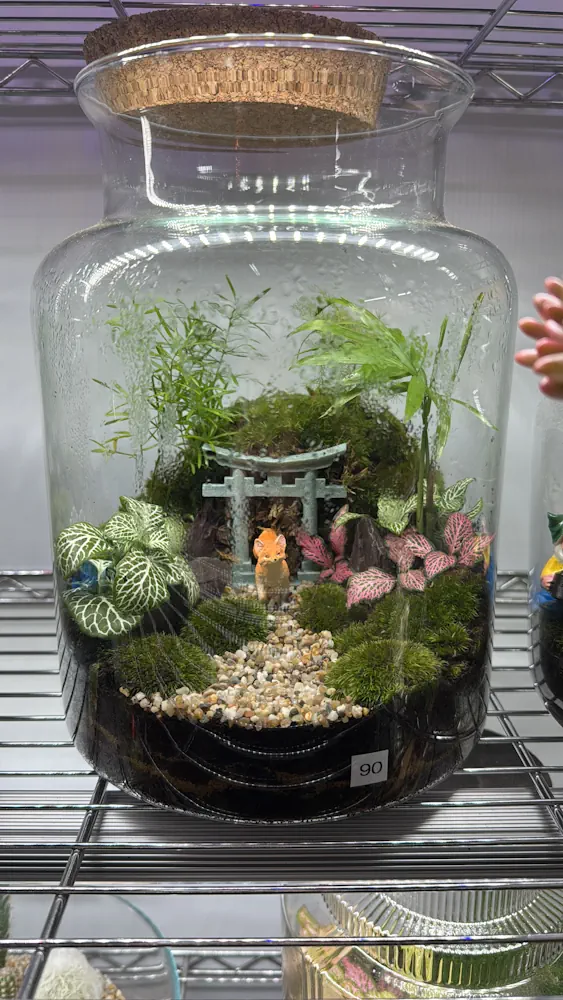
Condensation becomes an issue only if combined with other signs.
⚠️ Act only if you see:
-
Constant heavy condensation for more than 5–7 days
-
Sour or rotten smell
-
Mushy plants or visible rot
In this case:
-
Vent briefly
-
Reduce light intensity
-
Do not add water
Problems usually come from too much moisture + heat, not condensation alone.
4. No Condensation at All — Is That Bad?
Sometimes, yes.
No condensation for several days can indicate:
-
low moisture
-
too much airflow
-
very low light
Before acting, check:
-
Is the moss dry or pale?
-
Does the soil look dusty?
If plants look healthy:
👉 Do nothing.
If plants look dry:
-
Lightly mist once
-
Close the terrarium
-
Observe again
Never water just because the glass looks dry.
5. Condensation and Light Are Connected
Condensation changes with light.
More light = more evaporation
Less light = less condensation
This is normal.
Seasonal changes will affect condensation:
-
More in summer
-
Less in winter
Do not try to “correct” seasonal behavior.
6. Common Condensation Myths
❌ “Condensation means too much water”
→ Not always. It often means the cycle is working.
❌ “Wipe the glass daily”
→ This breaks the cycle and causes imbalance.
❌ “Open it every day to dry it out”
→ This creates instability.
❌ “Dry glass means it’s healthy”
→ Dry glass can mean dehydration.
7. How to Respond to Condensation (Simple Rules)
-
See light condensation → do nothing
-
See heavy condensation → vent once
-
See no condensation → observe plants first
-
Smell something wrong → vent + reassess
Terrariums respond slowly.
Your actions should be slow too.
Condensation is only one of the signals you should observe. For a complete terrarium care routine, see our [complete guide to caring for a terrarium], where we bring together watering, light, moisture, plants, moss and common terrarium problems.
8. Signs Condensation Is Balanced
A healthy terrarium:
-
has occasional condensation
-
clears and fogs naturally
-
smells earthy, not sour
-
changes slowly over time
If the terrarium feels boring, it is doing well.
9. The MossBoss Principle
Condensation is not feedback asking for action.
It is feedback asking for understanding.
When you stop reacting to the glass,
the ecosystem stabilizes.


